The emergence of strategic organisational planning

Share
Related Posts




In the dynamic landscape of finance, Financial Planning and Analysis (FP&A) teams are undergoing a significant transformation. No longer confined to isolated silos, planning is now an organisation-wide activity. As businesses recognise the strategic importance of FP&A, they are using planning and forecasting to drive impactful decision-making across the entire enterprise.
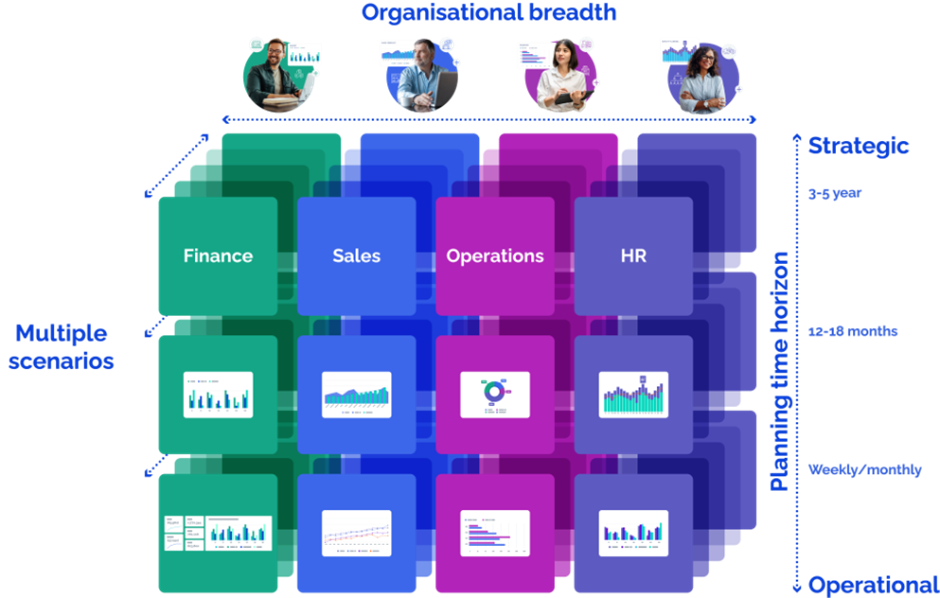
1. Bridging long-term goals with day-to-day operations
Traditionally, FP&A focused on short-term financial planning, often neglecting long-term strategic objectives. However, forward-thinking organisations are now bridging the gap between these two scopes. By aligning near-term operational plans with overarching business goals, FP&A professionals create a cohesive roadmap. This bridge ensures that day-to-day decisions contribute to the realisation of broader strategic visions. Their efforts are essential in ensuring that every business decision is made with both the present and future in mind.
Example: A tech start-up aiming for rapid growth. While daily cash flow management remains critical, FP&A also considers long-term capital requirements, market expansions, and potential mergers. By integrating these perspectives, the team can distribute resources effectively and sustainably. It also means that they can ensure that their day-to-day activities culminate to achieve the future strategic goals.
2. Cross-departmental collaboration
Historically, FP&A operated within its own bubble, detached from other departments. Today, successful organisations break down these silos. Collaborative planning involves input from sales, marketing, operations, and HR. By integrating data and insights from various functions, finance teams gain a complete view of the business. This cross-departmental approach fosters agility, adaptability, and better decision-making. Ultimately, this connected approach to planning is expected to drive better business outcomes and foster a more dynamic and responsive organisational culture.
Example: A retail company planning for the up-and-coming holiday season. Instead of Finance planning their sales forecasts in siloed teams, they can collaborate with marketing to understand promotional campaigns, supply chain to manage inventory, and HR to address staffing needs. The result? Increased visibility into the drivers of the company and better overall outcomes that maximises revenue while minimising costs.
3. Supercharging Decision-making with scenario planning
Static forecasts are no longer sufficient. Businesses operate in a volatile environment, facing disruptions like supply chain bottlenecks, regulatory changes, and economic shifts. FP&A teams should now embrace scenario planning—creating multiple what-if scenarios to assess risks and opportunities. Being able to do so will empower them to make better decisions and strengthen their strategic planning both day to day and for the future. Whether it is a sudden market downturn or unexpected growth, scenario analysis equips decision-makers with actionable insights. The result? An agile and adaptive organisation. Cultivating such a skill is not just beneficial; it is essential for those who want to thrive in an environment where certainty is a luxury and agility is a necessity.
Example: An automotive manufacturer attempting to make better decisions for their supply chain. Companies are now able to explore several significant scenarios related to planning and managing their supply chain. This might include potential disruptions to the organisation such as raw material shortages, increased bureaucracy, and geopolitical tensions. By stress-testing financial models, FP&A identifies vulnerabilities and can develop contingency plans. This proactive approach ensures resilience in uncertain times.
Conclusion
Remember, every business is unique, but these principles apply universally. The shift from isolated planning to a collaborative company approach marks a significant growth towards strategic, informed decision-making. By bridging the gap between short-term operations and long-term goals, fostering cross-departmental collaboration, and embracing scenario planning, FP&A teams are not just preparing for the future—they are shaping it. As FP&A continues to evolve, it will become the cornerstone of business strategy, driving growth and innovation through every financial forecast and analysis.
What to read and do next
Think your planning is solid? Explore our latest finance blogs to uncover the hidden risks that could be holding your organisation back:
- The Excel ceiling: when your most important planning tool becomes your biggest liability
- Why your forecast was wrong again – and why it’s not your team’s fault
- The planning gap no one talks about: why mid-market businesses are more exposed than they think
Plus, make sure you use our Confidence Grader. It scores your planning function across five dimensions in under three minutes — and shows you exactly where speed, visibility, and confidence can be built. Because the businesses that navigate the next two years most successfully won’t be the ones with the best forecasts. They’ll be the ones who can see what others can’t. Take the Confidence Grader